
How Wayne County Warrant Searches Work
Wayne County does not run an official public warrant search. No countywide active-warrant list or most-wanted page was found for the Wayne County Sheriff's Office. The Sheriff's site offers an inmate lookup, bond information, a jail dashboard, visitation details, and contact pages. It stops short of a searchable warrant database. So a Wayne County warrant search means working through a chain of official channels, not one screen.
Each channel holds a piece of the picture. The court where a case is pending may show a bench warrant or a failure-to-appear entry. The Wayne County Prosecutor decides whether a police warrant request becomes a charge. The Sheriff runs an internal check during bond processing. State systems track people under supervision. None of these is a single Wayne County warrant lookup. Together, though, they cover most situations a resident will face.
The Michigan Department of Corrections keeps a public Most Wanted page, and at inspection it listed no offenders at all.
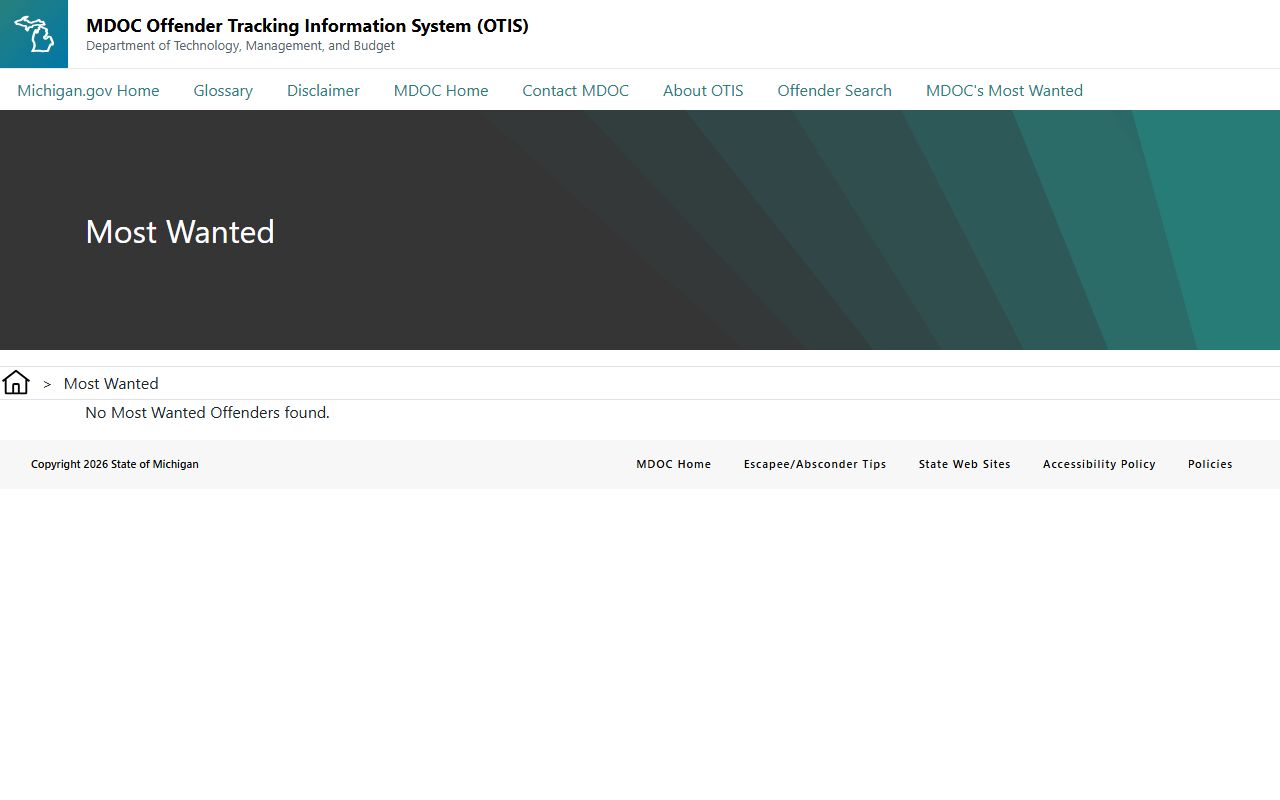
That gap is a reminder. A most-wanted screen is not a Wayne County warrant search, and it rarely reflects local bench or traffic warrants.
Types of Wayne County Warrants
Wayne County warrants come in several forms. The label matters because it points to which court or agency issued the order and how a person clears it. A traffic bench warrant is handled very differently from a felony arrest warrant. These are the main types tracked across Wayne County courts and Michigan agencies.
- Arrest warrant - issued to arrest a person on a criminal charge.
- Bench warrant - issued by a judge for failure to appear, contempt, or a missed court obligation.
- Search warrant - authorizes a search of a place or item, and may be sealed while an investigation is open.
- Fugitive warrant - covers out-of-jurisdiction wanted persons and extradition holds.
- Absconder status - flags parole or probation absconders in state records, not ordinary local warrants.
Most people encounter the first two. Bench warrants for missed hearings and unpaid tickets are common in district court, while arrest warrants tie to a criminal charge.
Note: The type of Wayne County warrant decides the court and the clearing process, so confirm the label before you assume a matter is minor or major.
Checking a Wayne County Warrant Through the Court
The court that issued the order is the first place to look. For Detroit matters, the 36th District Court is the busiest district court in Michigan and handles most traffic and misdemeanor cases in the city. Its online Case Inquiry shows case and schedule data. Its Traffic Information Inquiry form lets a person request warrant, bond, and balance details by email. Felony cases move from a district court to the Third Judicial Circuit after bindover, so circuit warrant activity may appear in Third Circuit Odyssey Public Access or at the Criminal Justice Center records room.
The court's own Traffic Information Inquiry page spells out what it will and will not return.
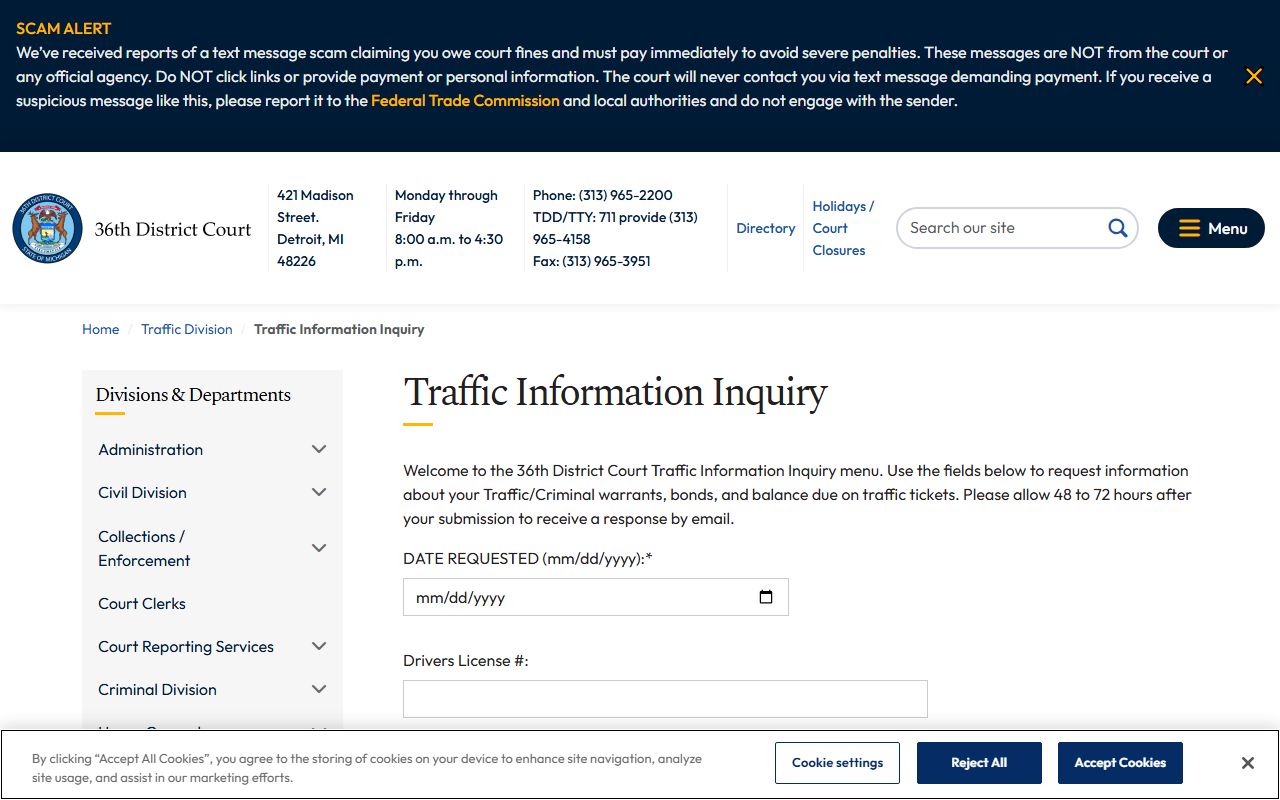
The form gathers identity details and sends a written reply. That makes it the closest thing to a Wayne County warrant lookup for Detroit traffic and criminal cases.
- Identify the court tied to the possible warrant. Detroit traffic and misdemeanor matters usually start at the 36th District Court.
- Search the right public system. Use 36th District Case Inquiry for Detroit cases and Third Circuit Odyssey Public Access for circuit cases.
- For a Detroit traffic or criminal warrant, submit the 36th District Traffic Information Inquiry and allow 48 to 72 hours for a reply.
- Call the court of jurisdiction before you appear if the online result is unclear.
Note: Warrants, fingerprint cards, and evaluations are not viewable or certified through the 36th District records-request process, so the inquiry form is the correct route.
Wayne County Warrant Inquiry Fields
The Traffic Information Inquiry form asks for enough detail to match a person to a case. Required entries include the request date, date of birth, first and last name, mailing address, city, state, ZIP code, and email. A driver's license number and middle name are optional, but they help narrow the match. The reply comes by email, so the address must be correct. These are the fields the form collects.
| Field Label | Type | Required | Notes |
|---|---|---|---|
| Date Requested (mm/dd/yyyy) | Date | Yes | Date of the request. |
| Driver's License # | Text | No | Used to identify the ticket or case. |
| Date of Birth (mm/dd/yyyy) | Date | Yes | Required to match a person. |
| First Name | Text | Yes | Required. |
| Middle Name | Text | No | Optional. |
| Last Name | Text | Yes | Required. |
| Mailing Address | Text | Yes | Street address of the requester. |
| City | Text | Yes | Required. |
| State | Text | Yes | Required. |
| ZIP Code | Text | Yes | Required. |
| Yes | The reply arrives by email in 48 to 72 hours. |
What a Wayne County Warrant Record Shows
Wayne County warrant details rarely appear as a standalone record. They show up inside a court case file or an inquiry response. When that happens, a handful of fields tend to appear. The exact layout depends on the court and the case type. These are the fields that commonly surface.
- Warrant Type - whether the order is an arrest, bench, or failure-to-appear warrant.
- Issuing Court - the 36th District Court, another district court, or the Third Circuit.
- Related Charge - the offense or civil infraction tied to the case.
- Bond Amount - the dollar figure set for release, when a bond is ordered.
- Balance Due - any unpaid ticket or fine linked to the matter.
- Case or Docket Number - the court's file number for the case.
- Status and Date - whether the warrant is active and when it issued.
Note: A Wayne County warrant record is usually part of a larger court file, so the full case history often explains the bond, the charge, and the next date.
Prosecutor Screening of Warrant Requests
Not every Wayne County warrant starts in court. Many begin as a police request that the Wayne County Prosecutor must review. The office's Screening Section reads police reports, witness statements, video, and other evidence before it authorizes or denies a warrant request. Some requests are denied for further investigation. The Wayne County Prosecutor handles more than half of Michigan's felony cases, so this step carries real weight. It explains how a police request turns into a criminal charge. It does not create a public warrant search.
A joint Detroit Police and Wayne County Sheriff fugitive unit, known as FAST, works to arrest people with outstanding felony warrants and gives priority to gun-crime warrants. Its work confirms that felony warrants get active follow-up even without a public list. You can read how screening functions on the Prosecutor Screening Section page.
Sheriff Bond Checks and Wayne County Warrants
The Wayne County Sheriff's Office touches warrants during bond processing. When someone posts bond at the Wayne County Jail, staff run a LEIN inquiry to check for extra wants or warrants. Any added charges must be cleared before release. This is an internal law-enforcement check, not a public Wayne County warrant search. Phone staff will not confirm warrant details to the general public, so a call is best used for basic agency contact.
Wayne County Sheriff's Office
Central Administration
5301 Russell Street
Detroit, MI 48211
Main: 313-833-0864
Sheriff Administration: 313-224-8426
Narcotics Tip Line: 313-224-2593
Emergencies: 911
The office also publishes a mobile app; its iOS listing describes crime reporting, tip submission, and public-safety news.
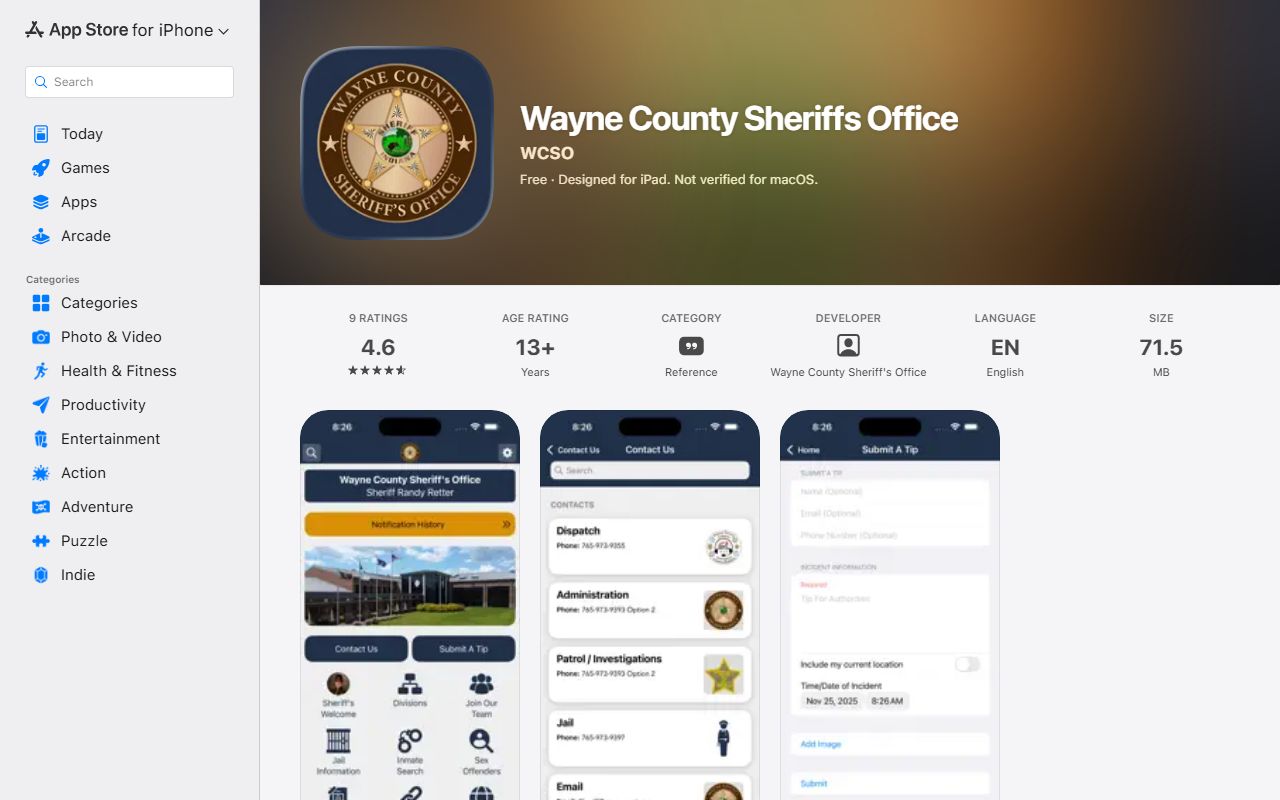
The app is built for reporting and tips, not emergencies. It does not include an active-warrant search for Wayne County.
State Systems and Warrant Myths
Two state tools get mistaken for a Wayne County warrant search. The first is OTIS, the Michigan Department of Corrections offender tracking system. Its offender-status filters include parole absconders and probation absconders, who are people who left state supervision without permission. OTIS does not cover local bench warrants, ordinary district-court traffic warrants, unsentenced jail inmates, or county-jail-only sentences.
The department's OTIS page lays out exactly who the system includes and excludes.
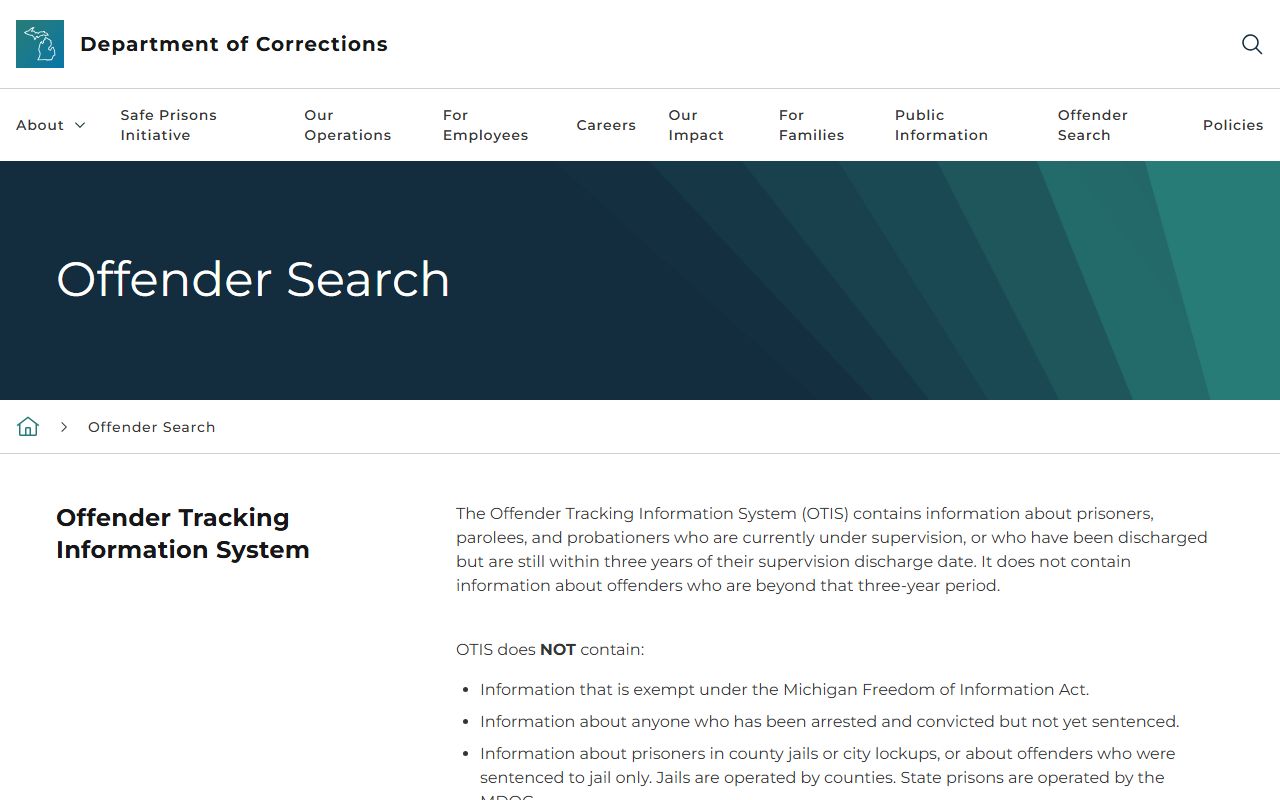
So OTIS helps only when the person is a state absconder. It is not a route for a routine Wayne County warrant.
The second tool is ICHAT, the Michigan State Police criminal-history system. It returns public conviction history, not warrants. The State Police state plainly that suppressed records and warrant information are not available through ICHAT. Treating a clean ICHAT report as proof of no warrant is a common and costly mistake. The State Police also keep a mobile app page for its public tools.
Note: A clean ICHAT report does not mean a person has no Wayne County warrant, because warrant data is not part of the ICHAT system.
What to Do About a Wayne County Warrant
Finding out about a warrant is only the first step. Clearing it takes a plan. The right move depends on the court, the charge, and whether the person is already in custody. Acting quickly and through the proper court usually beats waiting.
- Identify the court or agency behind the warrant, since Detroit traffic matters, felonies, and family cases each route differently.
- Search the matching public system, such as 36th District Case Inquiry, Third Circuit Odyssey Public Access, or Probate Case Access.
- For a Detroit traffic or criminal warrant, submit the 36th District Traffic Information Inquiry for warrant, bond, and balance details.
- Call the court of jurisdiction before you appear if the online result is unclear.
- If the person is in custody, check the Wayne County inmate records, then contact the court for charge, case, and bond specifics.
- If bond is set, follow the Sheriff bond policy and the court's payment rules.
Outcomes and sentencing for a resolved felony live in the Wayne County criminal court records, which hold the full case file once a warrant leads to a charge.
Important: Speak with a lawyer before you turn yourself in on any Wayne County warrant, since counsel can arrange bond, timing, and surrender in a way that protects your rights.
Wayne County Warrant Scam Warnings
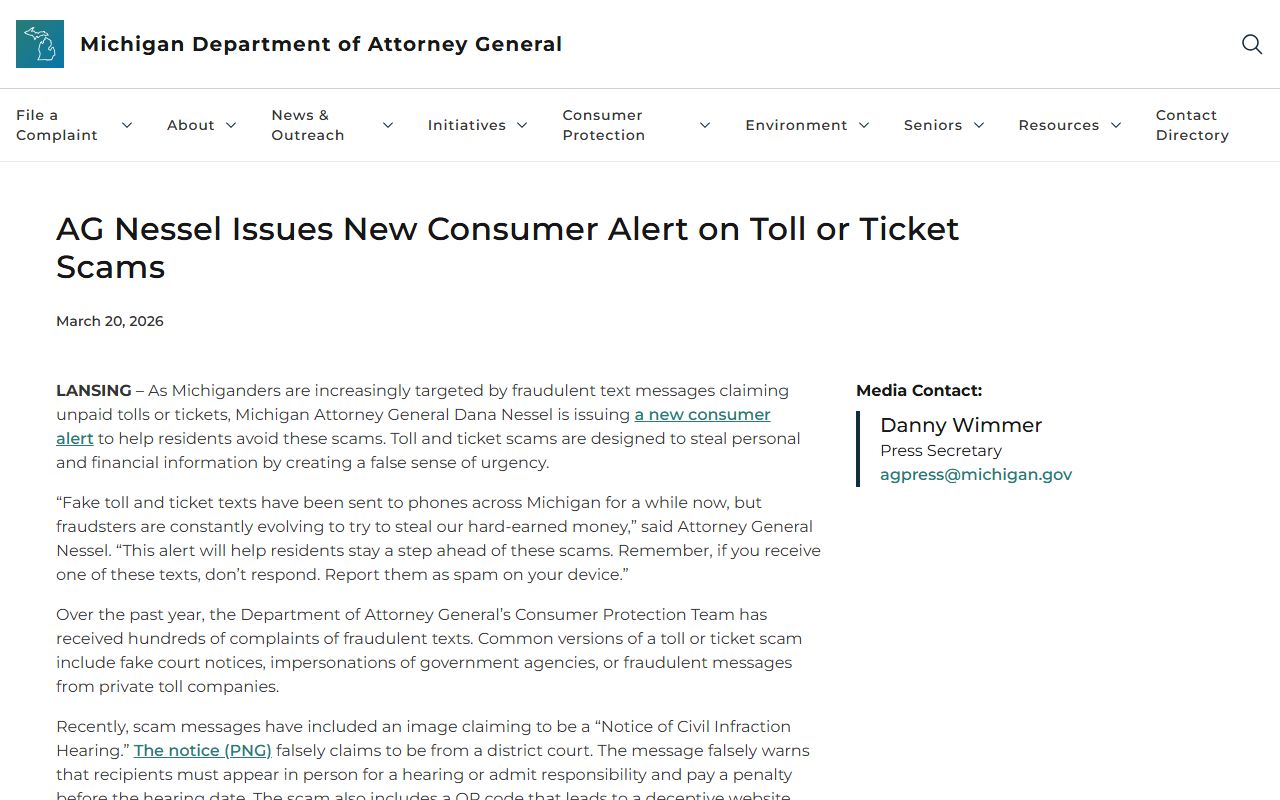
Warrant fear makes people easy targets for scams. The Michigan Attorney General issued a consumer alert on March 20, 2026 about text-message scams. The messages impersonate courts, the state, toll operators, or the Secretary of State. Some pose as a fake Notice of Civil Infraction Hearing and carry QR codes or links. The 36th District Court says it will never text anyone demanding immediate payment.
The Attorney General's consumer alert details how the scam texts are worded.
Real Wayne County courts do not settle a warrant by text. No legitimate warrant is cleared through a link in a message.
Warning: A real court will not text a QR code or link demanding payment to clear a warrant, so verify any notice by calling the court directly.
Restricted Wayne County Warrant Records
Some Wayne County warrant records stay out of public view. Search warrants may be sealed or held back while an investigation is open. Juvenile matters carry their own confidentiality protections. Records tied to active law-enforcement work can be withheld under Michigan's Freedom of Information Act, and court warrant information is often controlled by court rules rather than open-records requests.
The 36th District Court also confirms that warrants, fingerprint cards, and evaluations cannot be viewed or copied through its records-request process. That limit is why the Traffic Information Inquiry and a call to the court of jurisdiction remain the practical paths for a Wayne County warrant check.
Note: Sealed or juvenile Wayne County warrant records are protected by law, so even a valid request may return no viewable document.